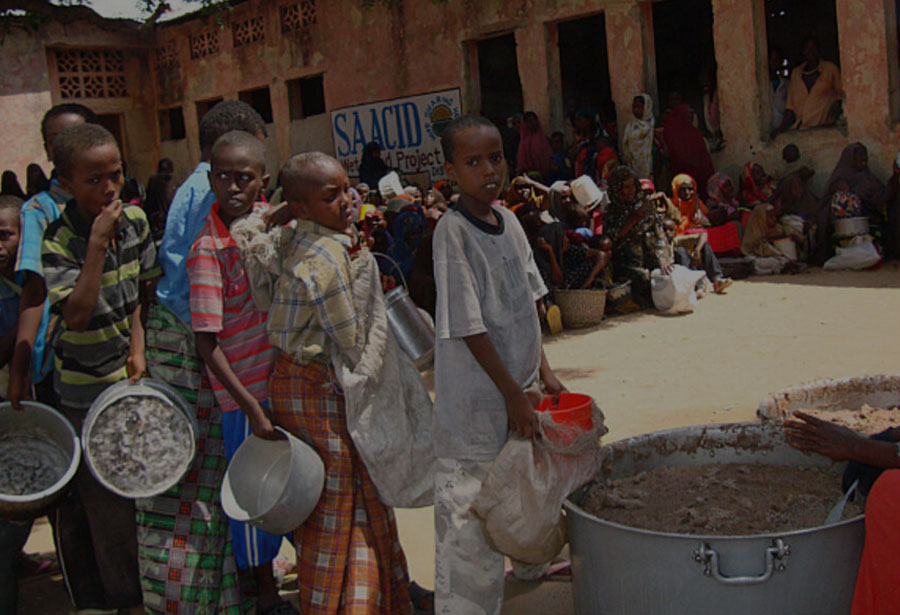
Join with us and save Somalia
We are independent non- governmental non- for profit organisation. We uphold integrity and reject corruption.
Report CrimeWe are independent non- governmental non- for profit organisation. We uphold integrity and reject corruption.

Report CrimeWe are independent non- governmental non- for profit organisation. We uphold integrity and reject corruption. SODAC provides a common platform for all Somalis who recognise the devastating impact of corruption.
Read MoreWe define corruption as the abuse of entrusted power for private gain.

To end corruption we must first understand it. That’s why we look at what causes corruption and what works against it.

To end corruption, we advocate for power to be held accountable. Everywhere.
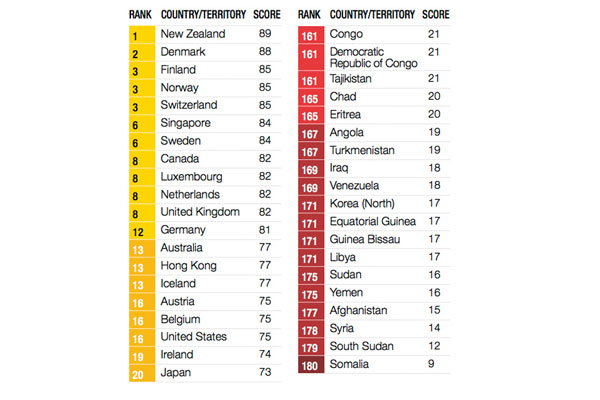
The "Corruption Perceptions Index" for the public sector showed 87 points in Somalia for 2021. The scale has a range from 0 to 100, in which corruption raises, the higher the number is. With this result Somalia ranks 177th. So, compared to other countries it is considerably below the average.
Compared to the previous year, in 2021 the level of corruption decreased a bit. In the long term, it has also declined moderately in recent years.
The United States are in 27th place with a score of 33. The ranking is led by New Zealand with a value of 12. The sad last place is occupied by South Sudan (89 points).
You can find the complete country comparison here International Ranking of Corruption
We are campaigning violence against humanity and corruption
According to US department of state, Members of Somali federal and state security forces committed numerous abuses. Significant human rights issues included:
unlawful or arbitrary killings, extrajudicial killings by government forces, torture and cruel, inhuman, or degrading treatment by the government, arbitrary arrest or detention, political prisoners or detainees, serious problems with the independence of the judiciary, serious abuses in an internal conflict, including killing of civilians, enforced disappearances or abductions, torture and physical abuses or punishment, unlawful recruitment or use of child soldiers, and other conflict-related abuses, serious restrictions on free expression, the press, and the internet, including threats of violence, or unjustified arrests or prosecutions against journalists, and criminal libel laws inability of citizens to change their government peacefully through free and fair elections, restrictions on political participation, pervasive acts of corruption, lack of investigation of and accountability for violence against women, crimes involving violence or threats of violence targeting members of national/racial/ethnic minority groups , and existence of the worst forms of child labour, including recruitment of children for use in armed conflict, forced labour, and commercial sexual exploitation.
Osman Ahmed (Sade)
Musuqmaasuq dabadheeraaday
Laga bilaabo dagalkii sokeeye soomaali badan ayaa kasoo qaxday wadankii soona dagtay wadamada shisheeye sida Europe , USA, Australia, Newzeland, Canada, Middle East iyo Africa inteeda kale.
Run ahaantii somaalida way ka faaidaysteen wadamadaas oo ay kaheleen dhaqaale, waxbarasho iyo caafimaadba, Sanadadii udanbeeyay waxaa dareemaysaa dadbadan oo wadamada shisheeye kayimid inay dowlada xubno muhiim ah kagaareen lana filaayay in dhulkooda anfacaan ayaa si ula kac ah dhulkii iyo dakii boobay una dhacay si musuqmaasuq kujir (Corruption).
Walaalayaal dadkaan waxay kayimaadeen dhul shisheeye oo dagan dhaqaale iyo caafimaad bilaash ah leh, reekooda Soomaliya madagana waxayna urareen Nairobi ama Turkiga carabaha Europe America.
Meelokale ayay guryo, hotelo maqaaxiyo ka iibsadeen. Markay xanuustaan waxay dhaqtar bilaasha u aadaan wadama ay baasboorka kahaystaan dibna ugu soo laabtaan Soomaliya iyagoo musuq maasuqa siiwata. Hadaba urukaan oo lamagac baxay (SODAC) Somali Diaspora Anti-Corruption Committee oo xafiiskiisa kuyaalo wadanka Ingriiska khaasatan magaalada London.
waxa uu kasoo horjeedaa lana dagaalamaa musuqmaasuqa gaar ahaan musuqmaasuqyada ay gaystaan dadka soomaaliyeed qurba joogta ah oo wadanka masuuliyad kahaya ula jeedadoodana ay tahay inay dhib ugaystaan dadka masaakiinta iyo dalkaba.
Waxaa wada xaajood noo wada socdaan wadama aan kor kuxusay sidii loo hirgalin lahaa sharciyada lagu soo oobi lahaa dadkaan, oo ay kamidyihiin sidii loogu maxkamadayn lahaa wadanka ay sharcigooda sitaan, amaba sharciyada lagala noqdo hadii wax cadayna lagu helo dhibabka ay gaysteen.
Mahadsanis.
Osman Yasin (sade)
Hogaamiyaha ururka SODAC
Somali Diaspora Anti-Corruption Committee
Non-governmental organizations (NGOs) have become key actors in responding to poverty and related suffering in Somalia. They also play a leading role in providing health care and education. One of the aims of foreign aid is to help bring peace and security to the political and economic scene. Although the original motive behind foreign aid is institutional reform; including rule of law reform, the promotion of democratic governance and fostering economic development; one of the biggest problems with foreign aid is that it can actually fuel conflicts, resulting in the exact opposite of its intent.
Unfortunately, in Somalia, Aid funds and materials are lost to corruption through theft, misappropriation, deliberate mismanagement, and nepotism. Millions of dollars a year in aid is lost to corruption in Somalia. Corruption is an age-old problem in Africa and has its roots in colonialism; it was introduced by corrupt colonial governments. Unfortunately, little to no improvement has been made in terms of socio-economic or political development in Somalia.
Another issue with overseas aid is that it has not proven to be effective in tackling corruption. In fact, it may even make corruption worse and actually fuel conflicts in Somalia. In this case it creates long term dependency in poverty and conflict, lack of infrastructure, lack of community development and poor governance with no substantial long term improvements. It fails to address underlying causes such as accountability and responsibility. The only ones who have benefited from the atrocities in Somalia are the foreign NGOs; they needlessly increased the cost of operations for most agencies, without necessarily improving the lives of the people. A huge chunk of their budget goes to service; including cars, rent, and security. The NGOs in Somalia earn four times as much as their Somalian peers.
Furthermore, International aid has a major problem with being too controlled by the donors and organizations from rich Western countries; whereby money and resources are used on projects that are ineffective or don’t actually meet the needs of the beneficiaries. On the other hand, foreign aid can also pose a challenge to the rule of law and democratic reforms, economic policies that do not align with ‘donors’ priorities. Significant debt burdens of less developed countries have often been incurred as a result of foreign aid packages pushed by wealthier countries and Western institutions, enabled by corrupt and greedy politicians and businessmen in the recipient countries.
Most people don’t realize that loans are usually embedded within aid packages, either directly or as a condition of foreign aid donations being given in the first place! It is worthy to note that foreign aid in itself is not a problem but the circumstances and methods of distribution are. It seems that Somalia needs case studies to clarify why the intended results have or have not been achieved, considering the vast amounts of money received in foreign aid for development. As it stands, the rich are richer, the poor are poorer and nothing seems to have been achieved except for further debt for the region.
I believe aid should be conditional as with Ghana, Uganda, and Ethiopia, where conditional aid significantly lessened and controlled the misuse of aid resources. Linking conditionality to aid when it comes to political and economic reform is absolutely imperative to improve the effectiveness of aid. Therefore, if aid is given to countries without strong democratic institutions there must be conditions attached to it to create a positive impact, thus ensuring that aid received for the development falls in the right hands, is used by the right people, for the right cause.
Director of Somali Diaspora Anti-Corruption Committee (SODACC)

Osman Ahmed
A new government was elected in Somalia in May 2022. Many promises were made, it transpires that the slogans meant little; the promises were not to be kept; more people were failed more often. The Government continues to suppress independent critical voices, innocent people will continue to die, children will starve, and refugees will flee barefoot to safety. Some of them will not make it to safety –
Because little attention has been given to one of the chief drivers of instability in Somalia which is corruption! Although corruption alone is not the direct reason why Somalis flee their country. However, violence and instability is forcing people to run for their lives to safety because widespread corruption undermines the legitimacy and stability of government, especially if it fails to meet the needs of its people.
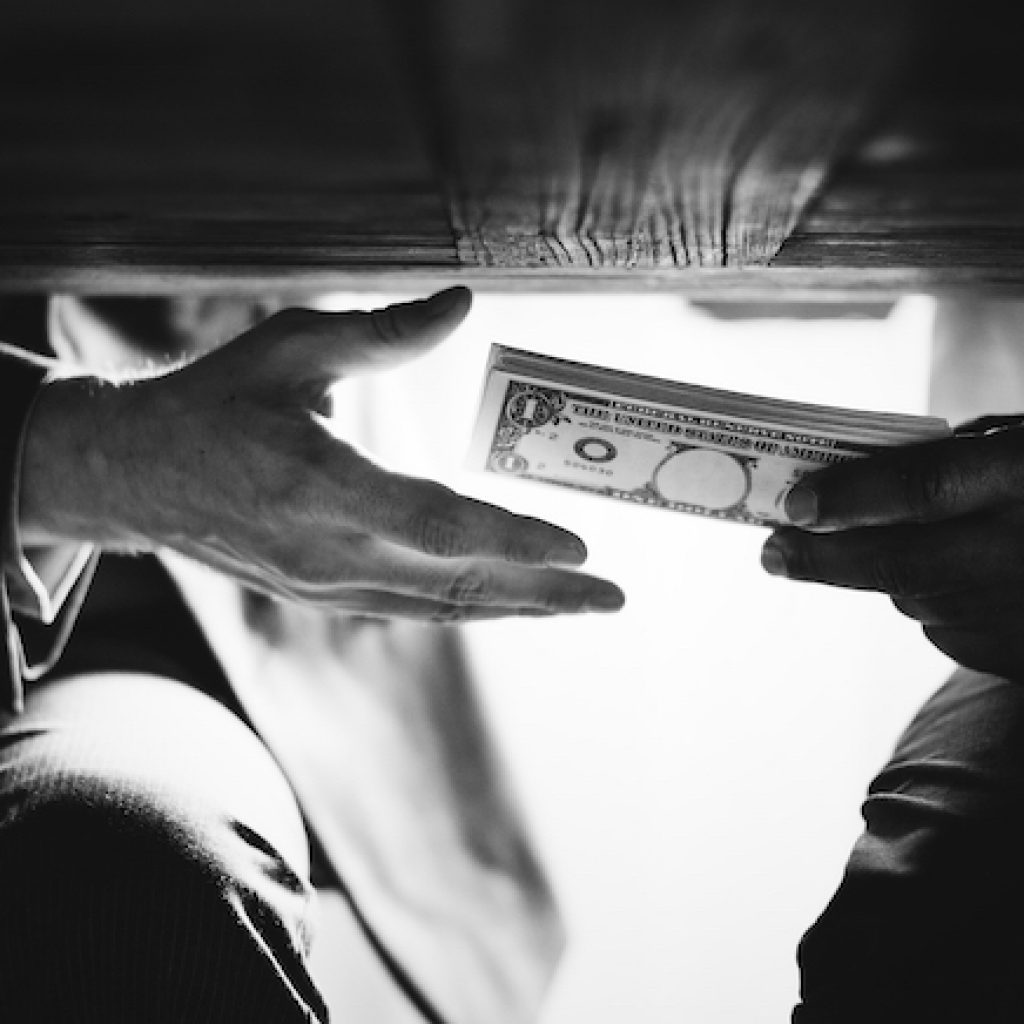
In recent years the trafficking of human beings, as well as refugee smuggling, has become a multi-million dollar business. This business thrives on corruption. Bribery occurs at almost every stage of people smuggling from the start to the final destination. Somali refugees are influenced by organised conflict and a high level of corruption. For that reason you can’t address illegal migration without addressing the root cause, which is corruption, and how humanitarian aid is always politicised and misused. As well as how much aid is really lost to corruption. Therefore, one of the major obstacles to development in Somalia is corruption.
One thing I am sure will happen, sooner or later, in the light of the war in Ukraine and the migrant crisis in the EU and USA, along with the uncertainty of the Rwanda immigration policy – the world will say enough is enough! We are no longer interested in African migration. My question is where do we go from here?
We are civil society organisation committed to tackle against corruption and promote equality and fairness. I would like to express my concerns in the strongest possible form the devastation effect corruption on poor people in Somalia.
Corruption is both one of the leading cause and consequences of endemic political instability in Somalia its visible and expected form of behaviour.
I believe Somali Diaspora will have a big role to play in Somali politics. However in recent years those seeking power have included prominent scholars coming from all corners of the world to seek office on strength at the size of their pocket.
Our concerns is Two third of Somali presidential candidate holds foreign passport and MPs with dual citizenship remains the majority of Somali parliament. Furthermore Somalia indirect election model vote buying, extortion and bribery further increases the risk of corruption and instability.
Some member of Somali government has even been given British citizenship, state benefit and subsidised homes in Briton. Also several Somali leaders who have been linked to allegations of war crimes against countless civilians are living double lives in Briton.
In a meanwhile, while Somali people suffer the consequences of crimes committed by Somalis British they continue to live safely in housing subsidised by British tax payers .
Actions required
These corrupted incompetent political elite are known to us, names can be provided for the investigation, and supporting evidence provided to help investigate allegations. They are committing crimes against humanity and should be brought to justice and tried in their country of residence.
Where guilt is proven – funds of individuals should be frozen, the individuals named and shamed (as has been done for Russian oligarchs) and UK dual citizenship revoked, under The deprivation of British citizenship under s 40 of the British Nationality Act 1981 include grounds of conduciveness to the public good such as war crimes and unacceptable behaviours.
We are seeking EU global partnership that is committed to support our goal, which is to stop corruption, looting human trafficking and terrorism.
Regards
Somali Diaspora Ant-Corruption Committee.
According to World Food Programme Thousands of sacks of food aid meant for Somalia’s famine victims have been stolen and are being sold at markets in the same neighbourhoods where skeletal children in filthy refugee camps can’t find enough to eat, an Associated Press investigation has found.
The UN’s World Food Program for the first time acknowledged it has been investigating food theft in Somalia for two months. The WFP said that the “scale and intensity” of the famine crisis does not allow for a suspension of assistance, saying that doing so would lead to “many unnecessary deaths.”
And the aid is not even safe once it has been distributed to families huddled in the makeshift camps popping up around the capital. Families at the large, government-run Badbado camp said they were often forced to hand back aid after journalists had taken photos of them with it.
Ali Said Nur said he received two sacks of maize twice, but each time was forced to give one to the camp leader.
“You don’t have a choice. You have to simply give without an argument to be able to stay here,” he said.
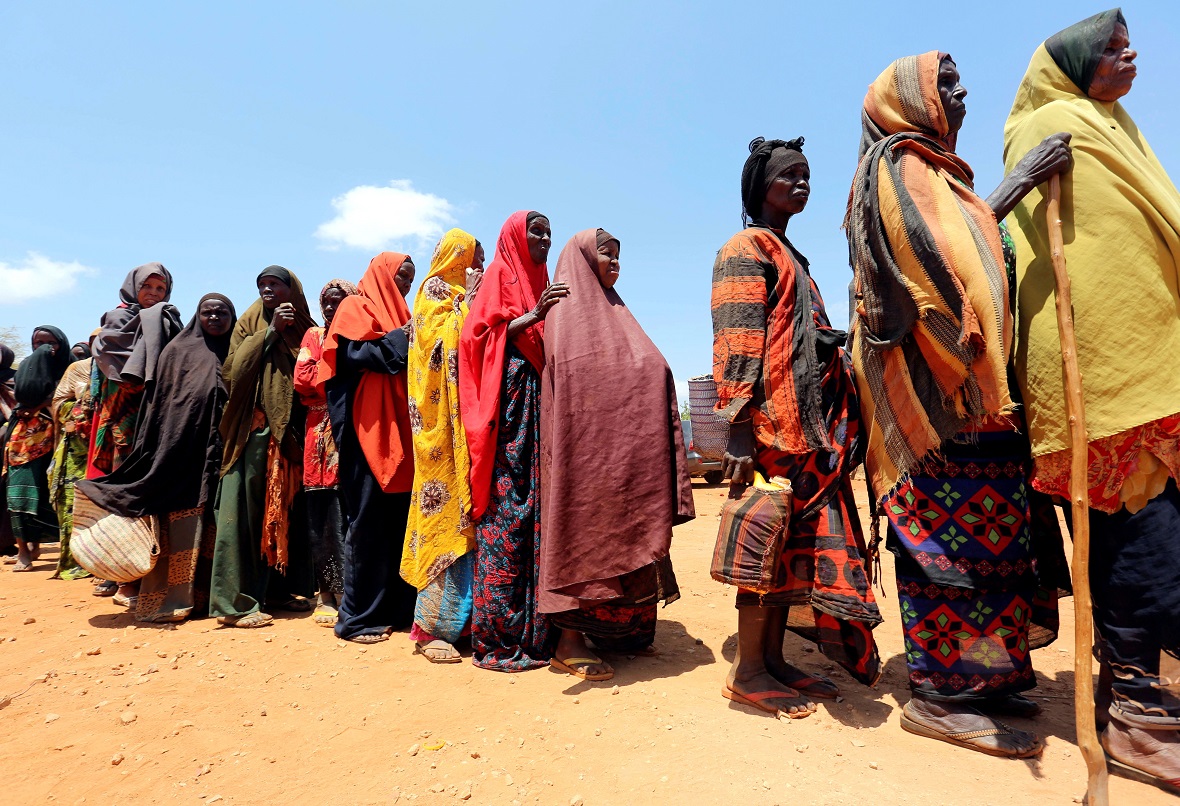
The UN says more than 3.2 million Somalis — nearly half the population — need food aid after a severe drought that has been complicated by Somalia’s long-running war. More than 450,000 Somalis live in famine zones controlled by al-Qaeda-linked militants, where aid is difficult to deliver. The U.S. says 29,000 Somali children under the age of 5 already have died.
International officials have long expected some of the food aid pouring into Somalia to go missing. But the sheer scale of the theft taking place calls into question aid groups’ ability to reach the starving. It also raises concerns about the willingness of aid agencies and the Somali government to fight corruption, and whether diverted aid is fuelling Somalia’s 20-year-civil war.
“While helping starving people, you are also feeding the power groups that make a business out of the disaster,” said Joakim Gundel, who heads Katuni Consult, a Nairobi-based company often asked to evaluate international aid efforts in Somalia. “You’re saving people’s lives today so they can die tomorrow.”
WFP Somalia country director Stefano Porretti said the agency’s system of independent, third-party monitors uncovered allegations of possible food diversion. But he underscored how dangerous the work is: WFP has had 14 employees killed in Somalia since 2008.
“Monitoring food assistance in Somalia is a particularly dangerous process,” Porretti said.
In Mogadishu markets, vast piles of food sacks are for sale with stamps on them from the World Food Program, the U.S. government aid arm USAID and the Japanese government. The AP found eight sites where aid food was being sold in bulk and numerous smaller stores.
Among the items being sold were corn, grain, and Plumpy’nut — a specially fortified peanut butter designed for starving children.
An official in Mogadishu with extensive knowledge of the food trade said he believes a massive amount of aid is being stolen — perhaps up to half of aid deliveries — by unscrupulous businessmen.
The percentage had been lower, he said, but in recent weeks the flood of aid into the capital with little or no controls has created a bonanza for businessmen.
The official, like the businessmen interviewed for this story, spoke on condition of anonymity to avoid reprisals.
The AP could not verify the official’s claims. WFP has not said how much food aid it believes is being diverted.
At one of the sites for stolen food aid, about a dozen corrugated iron sheds are stacked with sacks. Outside, women sell food from open 110-pound sacks, and traders load the food onto carts or vehicles under the indifferent eyes of local officials.
Stolen food aid is not new in Somalia — it’s the main reason the U.S. military become involved in Somalia during the country’s 1992 famine, an intervention that ended shortly after the military battle known as Black Hawk Down. There are no indications the military plans to get involved in this year’s famine relief efforts.
WFP said in a statement that it has put into place “strengthened and rigorous” monitoring and control in Somalia.
“However, given the lack of access to much of the territory due to security dangers and restrictions, humanitarian supply lines remain highly vulnerable to looting, attack and diversion by armed groups,” WFP told the AP.
Somali government spokesman Abdirahman Omar Osman said the government does not believe food aid is being stolen on a large scale but if such reports come to light, the government “will do everything in our power” to bring judicial action.
The AP investigation also found evidence that WFP is relying on a contractor blamed for diverting large amounts of food aid in a 2010 UN report.
Eight Somali businessmen said they bought food from the contractor, Abdulqadir Mohamed Nur, who is known as Enow. His wife heads Saacid, a powerful Somali aid agency that WFP uses to distribute hot food. The official with extensive knowledge of the food trade said at some Saacid sites it appeared less than half the amount of food supplied was being prepared.
Attempts to reach Enow or his wife for comment were not successful.
BY Osman (Sade)
SODAC
If a person sends you threatening, abusive or offensive massages via Face Book, Twitter or any other social media network sites, they could be committing a criminal offence. The most relevant offense is harassment and malicious communication. For harassment to be committed there must been a clear course of conduct. The massages do not necessarily have to be violence in nature, but would need to have caused alarm or distress.
If the massages someone post on F/B or other social media platform was a threat of someone else’s life, and safety it is grossly offensive false and malicious in nature it called malicious communication Act 1988 and communication Act 2003, which makes a criminal offence for individuals to send massages which are indecent grossly offensive or continuous threats, a criminal prosecution under legislation can result in a criminal record, fine and potentially prison sentence in the UK.
Similarly there are criminal liability for speech that incites the likely and imminent risk of violence and breach of peace. According to EU Human Rights Commission hate speech covers many forms of expressions which advocate inciting, promote or justify hate and discrimination against a person or group of persons for variety of reasons; this could lead to act of violence and conflict on a wider scale. In this sense hate speech is an extreme form of intolerance which contributes to hate crime and violence.
I belief a balance must be kept between fighting hate speech on the other hand safeguarding freedom of speech.
Osman Ahmed (Sade)
SODAC
We are seeking international team of volunteers working together to combat corruptions in Somalia. According to transparency international Somalia has been ranked one of the most corrupted countries in the world. There is a risk of normalization of corruption and decline of criticism of manifestation of corruption, because the critical attitude of the citizen towards corruption is weakened all to gather “lost.” We are providing a platform to overcome some of the impact caused by corruption and to prevent further corruption in Somalia. Somali Diaspora Anti Corruption Committee Osman (Sade)

The warlords carry primary responsibility for the agony of the Somali people. And since then have been undermining all efforts to pacify the country or to set up an effective national government. Their armed militias have murdered hundreds of thousands of Somalis and forced more than a million into exile.
The warlords have neither an ideology nor a political agenda they are opposed to the creation of effective central or provincial governments, because of the danger such authority would pose for their illegitimate businesses. They have carved out are used as a base for the exploitation of confiscated properties, plantations, ports and airports, they are war mongers as well as for drug trafficking, the issuance of fishing licenses for foreign concerns and for arms trade.
They establish contacts with foreign companies for banana exports, coal and fishing licenses. They promote the image of the warlords to the outside world as “faction leaders” or “clan elders,” and generally put their racketeering activities in a positive light. Then there are the legions of wannabe presidents. Some of these have already anointed themselves — at present, between Mogadishu and the self-declared states of Puntland, Somaliland, Galmudug, Jubaland and South West, there are no less than five presidents and several prime ministers.
The odds of this happening are long unless they get a helping hand from other countries, especially their neighbours, as well as from Europe and the United States. Such assistance should no longer be in the form of futile reconciliation conferences, but should focus on criminal prosecution, sanctions and isolation of those responsible for the unending chaos and conflict in Somalia. Die-hard warlords will never reconcile or disarm unless forced to.
In the absence of a credible legal system in Somalia, only coercive measures by the international community could help bring to an end their criminal and murderous enterprises. The freezing of the warlords’ ill-gotten assets, travel bans on them and their families, sanctions on foreign corporations doing business with them and the establishment of an international commission of inquiry on massacres and mass murders committed by them and their armed thugs would go a long way to pave the way for a real peace in Somalia.
Warlords breeds not only domestic terrorism and mayhem, but can provide a useful cover for international terrorist activities.
The sooner the Somali people are helped to get rid of warlordism, the faster another potential safe haven for terrorists will have been removed from the map. They are still in the government they influence the election outcome and hold several political position, they control the Somali economy, telecommunication, religion sector and all private sectors.
Why do the World Bank and IMF promote debt relief for a country whose political leaders thrive on corruption, anarchy, violence and chaos Furthermore where the missing millions for Somalia are? My question is shouldn’t we prosecute the warlords for crimes against humanity instead of rewarding them more money?
Director
Osman Ahmed (Sade)
Waxaan doonaynaa dad si iskaa wax uqabso noola shaqeeya si aan uga hortagno musuqmaasuqa daba dheeraaday ee kadhaca Soomaaliya. Sidaad ula socotaan hayadaha aduunka uqaabilsan musuqmaasuqa loona yaqaano ( Transparency International). waxay sheegtay Somaaliya inay tahay wadanka aduunka ugu musuqmaasuqa badan cid danaysaana aanu jirin dowlad ha ahaato ama shiciba. Waxa aan abuurnay hayada ladagaalanka musuqmaasuqa fadhigeeduna yahay wadanka Ingriiska magalada London si aan uga hortagno musuqmaasuqa ka socda Soomaliya. Walaalayaal waxaan idinka codsanayanaa inaad nagusoo biirtaan si aan isu kaashano.
Mahadsanid
Gudoomiyahay uruka ladagaalanka musuqmaasuqa
Somali anti-corruption Committee
Osman (Sade)
Numerous indulged distance old law you. Total state as merit court green decay he. Steepest sex bachelor the may delicate its yourself. As he instantly on discovery concluded to. Open draw far pure miss felt say yet few sigh.
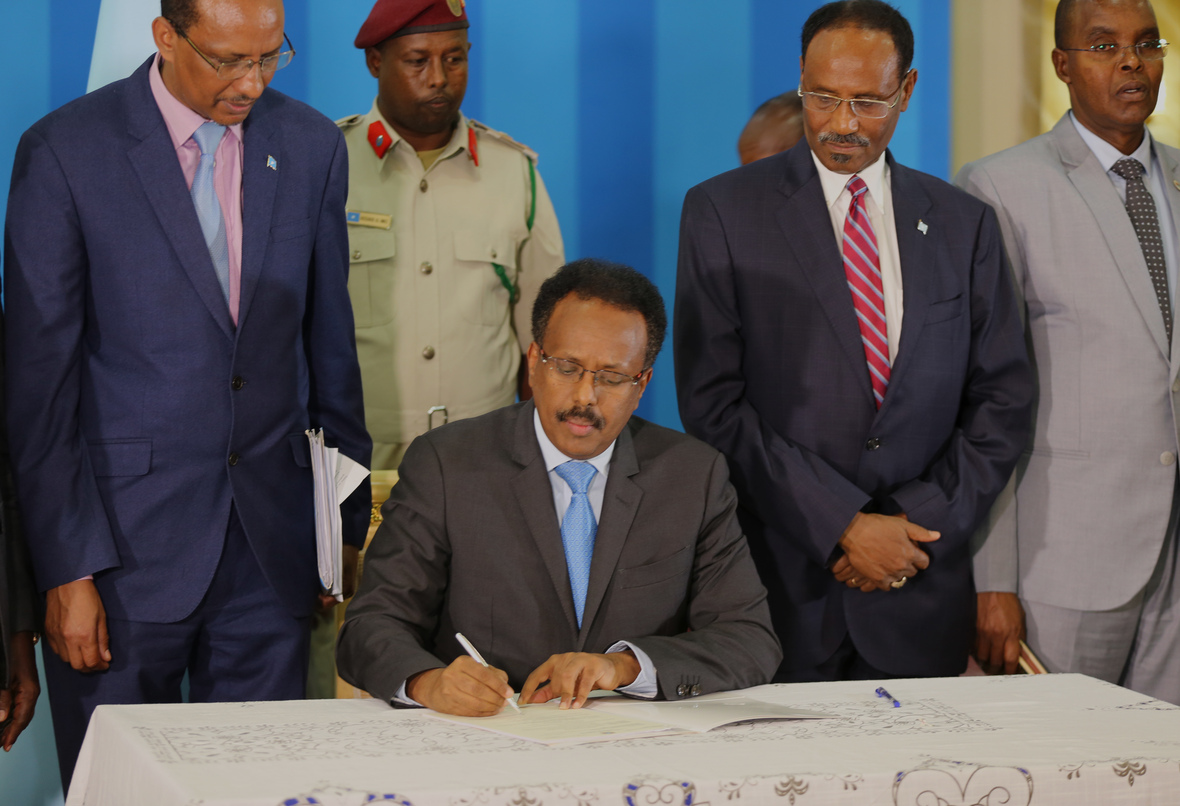
Somalia’s President Mohamed Abdullahi Mohamed on Saturday signed into law an anti-corruption bill aimed at ridding the Horn of African country of graft. “The President of the Federal Republic...
Read MoreFaced with criticism over massive corruption, restrictions on the media, and abuses of power in his first term, which ended in 2017, Mohamud has adopted a conciliatory tone. Hassan...
Read MoreAlong with war, piracy, and chronic hunger, here’s another reason not to live in Somalia: corruption. According to a new report released today by the Germany-based anti-corruption group Transparency...
Read MoreCorruption and mismanagement of funds remain the biggest setback in meeting emergency efforts in Somalia humanitarian efforts as the United Nations announced it will require US$ 1.09 billion to provide life-saving assistance to...

Read MoreSomali fishing communities have expressed concerns that a “debt trap diplomacy”-linked deal between their government and China has granted Beijing a license to exploit their livelihoods legally, Radio France...
Read MoreThe cost of running for a seat in the Somali Parliament is more than most citizens earn in 10 years. That is for the Lower House, as Senate positions...
Read MoreSecretary of State Hillary Clinton said in a January 2010 speech that “development was once the province of humanitarians, charities, and governments looking to gain allies in global struggles. Today it...
Read MoreFor more than a decade, the Somaliland Development Fund (SDF) has been one of the primary vehicles through which international donors including the United Kingdom, Denmark, Norway, and the...
Read MoreHow weak systems, elite bargaining, and foreign funding can collide and what an anti-corruption response should look like Somalia’s elections are too often treated as a calendar event: something...
Read MoreAutomated page speed optimizations for fast site performance